
Category
Platform
How EmberNet works, and why it is built the way it is.
-
Platform
Repurposing Existing Industrial PCs as Edge Nodes
Your old industrial PC can become a secure, managed edge node. What to check, how to secure it, and how to start without stopping the line.
-
Platform
The Firewall Change Request You Never Have to File
Every remote-access path to a plant becomes a ticket to IT, a hole in the perimeter, and something to maintain for years. Flux works the other way: the node dials out on port 443, nothing at the plant listens, and access follows identity. Here is what changes for the network team.
-
Platform
IEC 62443 zones and conduits for the people who actually wire the plant
A practical IEC 62443 guide for the people who wire the plant: segment the equipment you already run, enforce every conduit, keep remote access outbound-only.
-
Platform
HotLoop Gateway: One Historian, One Write Gate, Every PLC on Site
HotLoop Gateway reads your PLCs and drives, keeps every value with its quality, alarms to ISA-18.2, and refuses any write nobody armed. Here is how it works, and how it runs on an EmberNet edge node.
-
Platform
One Box, Many Workloads: Running Your Plant's Software as Containers and VMs
The HMI, the historian, the gateway, and the application nobody dares move do not each need their own computer. How containers and virtual machines let one EmberNet edge node run them side by side, walled off from each other and managed from one console.
-
Platform
A Silent Sensor Is Not a Quiet Network: How to Read an Empty Alert Queue
An empty alert queue is only good news while your sensors are reporting. Here is how EmberSecurity tells a calm plant from a sensor that has stopped talking, and how to check it each shift.
-
Platform
Who Told That PLC to Do That? Check Every Write Against Your Maintenance Window
When a setpoint changes or a line stops, the first question is who sent that write and whether anyone was supposed to. Here is how EmberSecurity answers it for every PLC on every EmberNet edge box.
-
Platform
Real-Time Linux on a Raspberry Pi 5: What 24 Hours of Testing Showed
We ran a real-time latency test on a Raspberry Pi 5 running EmberRTOS for 24 hours. The worst wake-up was 23 microseconds over about 627 million samples. Here is the setup, why a day matters, and what we did not measure.
-
Platform
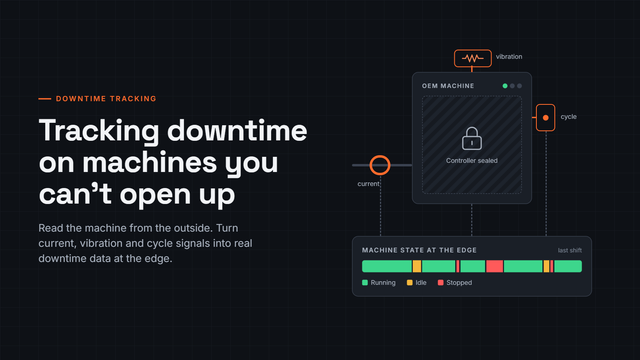
Tracking downtime on machines you can't open up
Track downtime on machines the OEM won’t let you open: read current, vibration and cycle signals from outside and turn them into states at the edge.
-

Platform
The EmberRTOS box you can set up with nobody on the phone
One person, one screen, no VPN. What the EmberRTOS setup app does on the machine itself, how the real-time switch works, and what we have and have not measured.
-
Platform
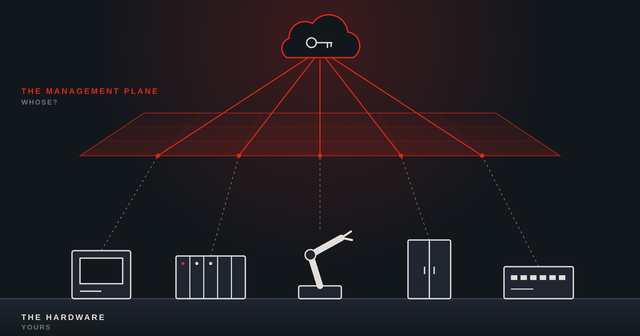
You own the hardware, who owns the management plane?
Vendors increasingly control the updates, licenses and remote access behind plant hardware. Six questions to ask before you sign.
-

Platform
Managing edge devices that are never online
Learn how to manage air-gapped and remote edge devices with offline-first updates, local control, resilient security, and reliable audit evidence.